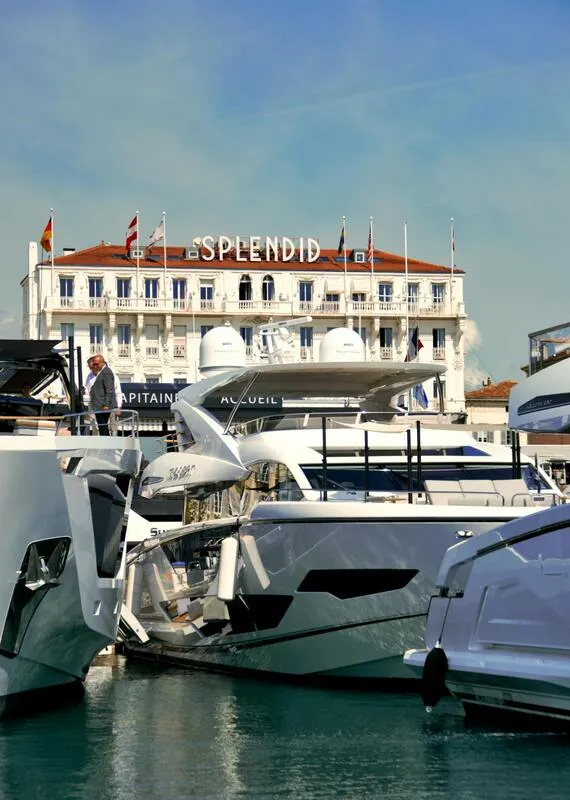
The stretch of coast between Saint-Tropez and Menton is the most chartered water in the Mediterranean. Here is how to plan a week on it properly.
The French Riviera has a head start on every other charter destination in the Mediterranean, and it is not really about the scenery. It is that everything a charter needs is packed into 70 nautical miles of coast: deep-water berths in every town, a fuel dock you are never more than an hour from, provisioning that can deliver caviar or a spare fender to the passerelle within the day, and more crew, brokers and refit yards than anywhere else on the sea. You can be ambitious with an itinerary here because the infrastructure quietly removes the friction.
That convenience is also why the coast can feel crowded in August, and why a good week depends less on the yacht than on the plan. This guide is about the plan.
When to go
The season runs from May to late September. Each month has a different character, and they are genuinely different, not marketing gloss.
May and June are the quiet reward months. The water is warming, the light is long, the anchorages off the Îles de Lérins and Cap-Ferrat are half empty, and the towns still belong to the people who live in them. The one caveat is the Cannes events calendar — the Film Festival in mid-May and a run of trade shows push berths and prices up sharply for those specific weeks.
July and August are peak in every sense: warmest water, longest days, every restaurant ashore fully booked, and the popular bays busy from mid-morning. If you are coming with children and the swimming matters more than the solitude, this is still the right window — you just anchor earlier and eat aboard more often.
September is the connoisseur's month. The sea holds its summer temperature into early October, the crowds thin out after the first week, and prices soften. If your dates are flexible, this is the week to ask for. We go through the trade-offs month by month in a separate guide to timing a Mediterranean charter.
The coastline, west to east
It helps to have a mental map before you plan, because the Riviera is not uniform. Roughly from west to east:
- —The Gulf of Saint-Tropez and the Var coast — the widest anchorages, the Pampelonne beach clubs, and the most 'scene' in summer. Pretty inland villages behind it if you want a day off the water.
- —Cannes and the Îles de Lérins — the festival town, and two small wooded islands ten minutes offshore that are the best easy anchorage on the coast once the day boats leave at six.
- —Antibes and Cap d'Antibes — Port Vauban, the largest marina in Europe, and a headland of quiet anchorages and grand villas. A practical base with an old town worth an evening.
- —The Baie de Villefranche and Cap-Ferrat — one of the deepest natural harbours in the Mediterranean, reliably calm, and a short tender from some of the best coastal walking on the Riviera.
- —Monaco and Menton — the Principality, and then the last stretch of French coast before Italy, quieter and often overlooked.
How a week usually runs
Most Riviera charters are based out of one of three hubs — Cannes, Antibes or Monaco — and work east or west from there. A classic seven-night loop looks something like this:
- —Embark in Cannes, anchor for the first night off the Îles de Lérins, a ten-minute tender ride from the Croisette but a different world once the day boats leave.
- —West to the Gulf of Saint-Tropez: two nights, one on the hook off Pampelonne for lunch and swimming, one stern-to in the old port if you want an evening ashore.
- —Back east past Antibes and Cap-Ferrat, with a long lunch stop in the Baie de Villefranche.
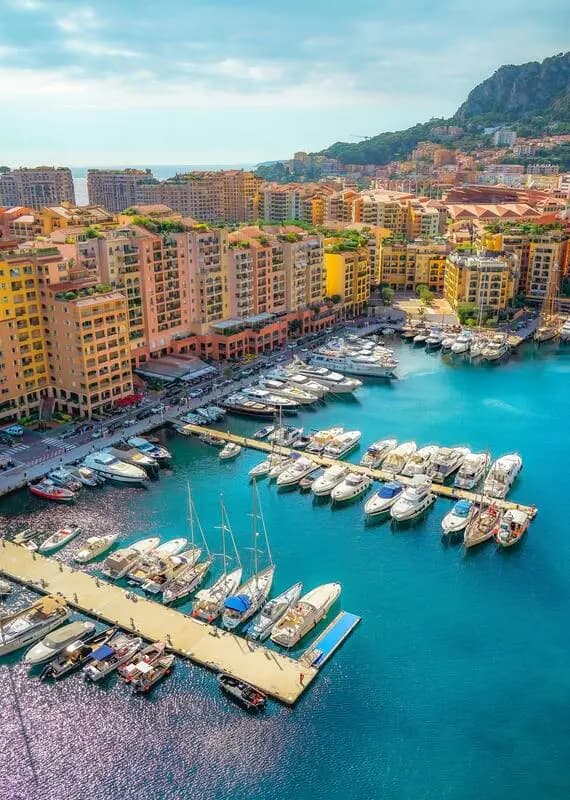
- —A night in Monaco, ideally timed to something: a concert, a match, or just dinner and the walk up to the Casino square.
- —The last full day pointed at Menton and the Italian border, or back west for a final anchorage swim before disembarkation.
None of that is fixed. The point of a private charter is that the captain rewrites the plan over breakfast based on the wind and what you feel like — see what a crewed charter actually involves for how that works day to day.
Weather to plan around
The Riviera is a settled place to sail, but two winds shape a week. The mistral is a strong, cold northwesterly that funnels down the Rhône valley and out over the western Riviera — it can blow hard for two or three days and makes the Gulf of Saint-Tropez uncomfortable, though the eastern anchorages near Cap-Ferrat stay sheltered. The easterly, less common in summer, does the reverse. A captain who knows the coast simply flips the itinerary to sit on the lee side of whatever is blowing, which is why the loop above works in either direction.
What it costs
Charter pricing on the Riviera follows the same logic as everywhere in the Mediterranean: a base fee for the week set by the yacht's size and age, plus an Advance Provisioning Allowance — usually around 30 percent of the base — that covers fuel, food, berthing, and anything else consumed during the trip. Whatever is not spent from the APA is returned at the end.
As a rough sense of scale, a well-kept motor yacht in the 25-to-30-metre range with a crew of four or five sits in the low tens of thousands of euros per week in base fee during peak season, before APA and the customary crew gratuity. Smaller day-and-weekend boats are a fraction of that. We cover this properly in a separate guide to charter costs.
The number that surprises people is not the base fee — it is how much the APA can swing depending on how the week is run. A week spent mostly at anchor, eating aboard, moving short distances, comes in well under budget. A week of long passages and a berth in a marquee port every night can use all of it. A berth in Monaco or the old port of Saint-Tropez in August is a four-figure night; the anchorage two hundred metres away is free and often nicer.
A few things first-timers get wrong
- —Trying to see the whole coast. Seven nights is four or five real stops. The Riviera rewards staying put — a morning swim, a long lunch, a walk, dinner — more than it rewards covering ground.
- —Booking marina nights 'to be safe'. Your captain will get you a berth when you actually want one. Most nights, the anchorage is the better choice anyway.
- —Underestimating the tender. A lot of a Riviera week is tender rides ashore for dinner or to a beach club. A yacht with a fast, comfortable tender and a deckhand who enjoys running it changes the trip.
Where the Riviera fits against everywhere else
If this is a first Mediterranean charter, the Riviera is the safe, high-reward choice: short distances, no language barrier for the crew, everything reachable, and enough variety in a week that no two days feel the same. It rewards people who want their evenings ashore.
If you have done it before and want more sea and fewer marinas, the natural next steps are Corsica and Sardinia across the Ligurian Sea, or the Greek islands further east. But most people who charter the Riviera once come back to it, because the thing it does — a serious yacht, a serious coastline, and none of the logistics landing on you — is genuinely hard to find elsewhere.
When you are ready to look at specific yachts and dates, our French Riviera charter fleet is the place to start, or speak to an advisor about shaping a week around what you actually want from it.