The best crewed charters feel effortless because a lot of invisible work is going on. Knowing roughly what that is makes you a better guest.
A first crewed charter can be slightly disorienting for people who are used to arranging their own holidays. There is a whole team whose job is to look after you, and the instinct is either to over-direct them or to feel awkward asking for anything. Neither is necessary. Here is roughly how it works.
Who is aboard
On a yacht up to the high 20s in metres, the crew is typically three to five people:
- —The captain — responsible for the yacht, the safety of everyone aboard, and the route. Also the person you plan the week with.
- —A chef — cooks every meal to your preferences, adjusts to allergies and requests, and provisions along the way.
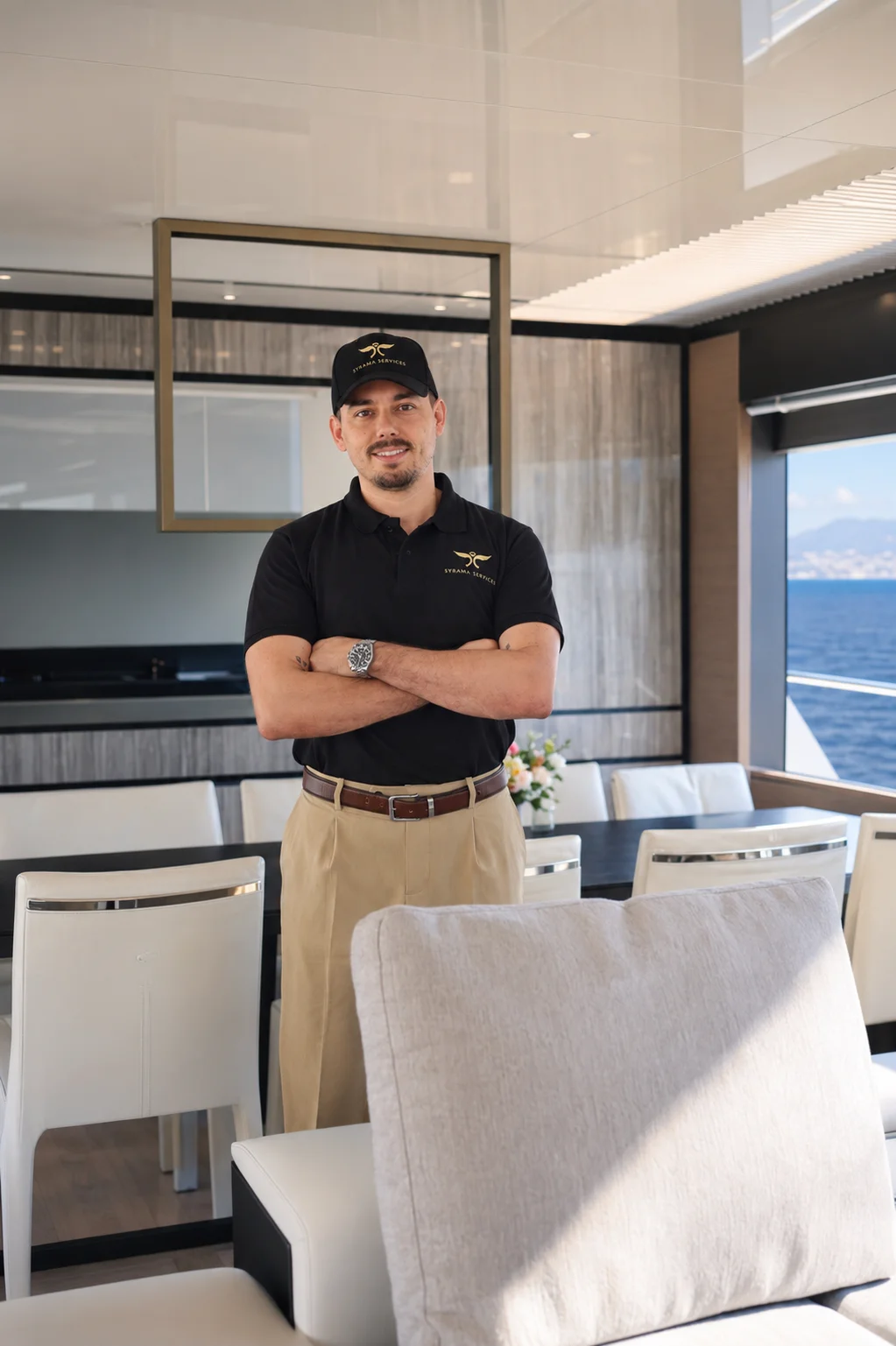
- —One or two stewardesses — the interior, the service, the cabins, the drinks, the detail.
- —A deckhand or first mate — the exterior, the tender, the water toys, and keeping the yacht immaculate.
Larger yachts add more of each, plus specialists — a dedicated bosun, a masseuse, a second chef, a dive instructor. Smaller weekend boats might run with a captain and one crew, or a captain alone.
Before you arrive: the preference sheet
A week or two ahead, you will be asked to fill in a preference sheet. Treat it seriously — it is the single biggest lever you have on how tailored the week feels. It covers food likes and dislikes for each guest, allergies, favourite drinks and wines, dietary requirements, how you like breakfast, whether you want a formal dinner or a barefoot one, celebrations and their dates, activity interests, and what a perfect day looks like. A chef who knows in advance that one guest is coeliac and another cannot stand coriander has provisioned around it before you step aboard.
How a day runs
There is no fixed schedule, and that is the point. A typical day: the crew are up early, the yacht is cleaned and prepped before you wake, breakfast appears when you appear. Over coffee the captain talks through options for the day based on the weather — a bay here, a town there, a longer passage or a short one. You choose, or you leave it to them.
Then the day unfolds: a passage, an anchorage, swimming, the water toys, lunch aboard, a slow afternoon, maybe a move to a second spot, dinner aboard or a tender ashore to a restaurant the crew booked. The crew read the mood — a lively group gets the music and the toys out, a quiet one gets left alone with a book. Good crew are very good at this.
What is expected of you
Not much, and mostly common courtesy. A few things genuinely help:
- —Send the preferences ahead, and be specific. Vague answers get vague results.
- —Take shoes off when boarding — teak decks and hard soles do not mix.
- —Be roughly predictable about meal timing where you can, or just tell the chef when plans change. They can flex, but a heads-up helps.
- —Treat the crew's cabins and the crew mess as theirs. They live aboard, and it is the one part of the boat that is not yours for the week.
- —Keep an eye on water and, on smaller yachts, power — long showers by eight people add up, and the crew would rather you knew than ran the watermaker flat out all day.
Tipping
A gratuity at the end is customary — commonly 5 to 15 percent of the charter fee, given to the captain to share among the crew, adjusted for how the week went. It is discretionary and tied to service. If the crew made the trip, the top of that range is normal and deserved. It is given privately, usually on the last evening or morning, in cash or by transfer, to the captain directly.
Privacy, and the small awkwardness of it
People sometimes worry about having crew around all week. In practice it resolves quickly. Professional crew are practised at being present when needed and invisible when not — they will not be in the salon when you want the salon, and they retreat to the crew areas in the evening once service is done. Within a day or two most guests stop noticing, and by the end of the week the goodbye is often genuinely a little sad.
The thing people underestimate
How much the crew shapes the week. Two charters on the same yacht in the same waters with different crews are different holidays. A captain who knows a coastline finds the anchorage that is empty when everywhere else is full; a chef who has understood your table turns dinner into the best part of the day; a deckhand who is genuinely good with kids changes a family trip entirely.
This is why matching the crew to the guests matters as much as matching the yacht, and why it is worth telling your advisor about the group honestly — not just the numbers. If you are still deciding on a destination, our French Riviera charter guide and the bespoke experiences the team arranges around a charter are good next reads. When you are ready, start with the fleet.